The CASE i3 Consulting Program offers impact investing organizations the opportunity to work with a team of carefully selected MBA students on an impact investing, ESG, or sustainable finance question they are currently addressing, benefiting from fresh perspective and expertise.

Our MBA consulting teams are equipped to work with organizations from across the investment field, including asset owners, asset managers, fund managers, and field-builders.
Your organization benefits from the passion, fresh perspective, independence, and technical expertise our students bring to the CASE i3CP. Our students benefit from the opportunity to apply their academic learning to an of-the-moment issue in the impact investing space.
Our application window is usually open July through August each year. If we are outside of the open application period, the Apply Here button will allow you to enter your name and email address so we can notify you when the next application cycle opens.
How it works:

We select a number of impact investing projects annually and match each client with a team of Duke University MBA students. Selected clients pay an engagement fee of $1000-5000.

Teams spend 400 person-hours on average researching, analyzing, developing models, and making actionable recommendations that they incorporate into client deliverables.

Teams work remotely and regularly with their client, and are directly supervised by Cathy Clark, Duke faculty member and Director of CASE i3.
Our CASE i3 MBA Students
Our CASE i3 Fellows and Associates are highly skilled first and second year MBA students at the Fuqua School of Business, selected by CASE i3 through a competitive application process. These students have a passion for impact investing and come to Fuqua with years of experience in related fields.
Previous Clients
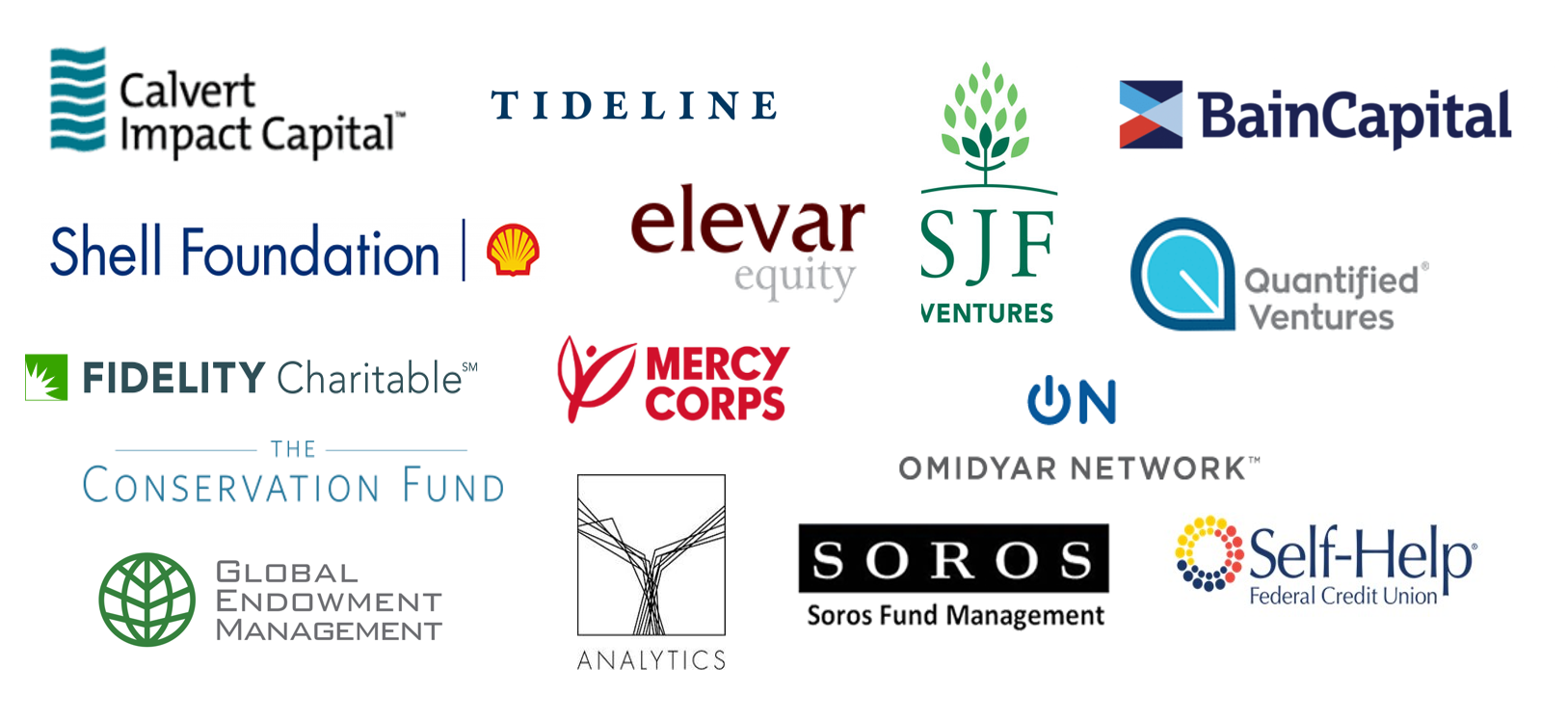
We’re proud to have served over 50 clients, including asset owners, asset managers, fund managers, and others:
Project Timeline
Applications are accepted over the summer for engagements from fall through spring. This year’s client application is due August 31, 2025. Appropriate projects can be designed to fit within the time frame detailed below. You can view the Fuqua School of Business academic calendar here.
| Late Aug | Client online application due |
| Early Sept | Project proposal due diligence call with an MBA Fellow |
| Late Sept | Projects selected and clients notified by lead MBA Fellow |
| Early Oct | Lead Fellow recruits and selects full team of MBA Associates |
| Early Nov | Client virtually meets full student team |
| Nov-Dec | Students complete preparatory workshops |
| Jan-Apr | Project work by student team Regular feedback from client |
| Late Apr | Final deliverables submitted to client Client completes exit survey |
Sample Projects
Client projects have covered a range of topics, including:
- Sustainability standards – We engaged internal and external stakeholders of a large asset manager to develop a strategy aligning internal practices with emerging ESG and sustainability standards
- Market entry – We developed a customized market entry plan including fundraising, due diligence, and impact management processes for a new impact VC fund
- Investment landscaping – We helped an impact fund decide which countries to focus on next as it expanded, based on economic conditions, entrepreneurial pipeline, and gaps in the investment landscape within certain industry segments
- Impact assessment – We created a custom model to quantify the carbon mitigation impacts of a portfolio
- Impact management – We recommended a comprehensive strategy for impact measurement and management for an impact VC fund
- Demand studies and product formation – We helped a global donor advised fund develop and test donor demand for new impact fund products
- Deal and industry diligence – We helped an impact fund within a larger private equity firm identify bright spots and investable deals within two target industry segments
Students sign NDAs and final deliverables thus often remain private to the client, but here are three examples of clients who shared their CASE i3 team’s work publicly:
Secha Capital, a South African impact investing firm that provides patient capital to established African SMEs, worked with a CASE i3 team to co-write a report on how U.S. corporations and PE funds can be engaged in investing in the consumer growth story in Africa.
SJF Ventures engaged their CASE i3 team and the Duke Carbon Offset Initiative to create a dynamic model illustrating how and where SJF’s portfolio companies reduce carbon emissions.
SustainVC worked with a CASE i3 team define key impact indicators PCC can use to track impact and then to develop a tool to systematically quantify the impact of the PCC portfolio over time.
Tips for Your Client Project Application
Clicking on the button will take you straight to the application during the open period. If outside the application period, the link will take you to a form to indicate your interest in being notified of future applications.
Some application tips:
- Be very clear about your scope of work, action steps you expect the students to take, and ideal final deliverables
- Detail the relevant expertise students will need to complete the project
- Explain how the project is appropriate for students working remotely from Durham, NC
If you have any questions about CASE i3CP or the application process, email Kelsey Zavelo.
What Past Clients Say About Our Teams
“The CASE i3 team operated at the same level as any high-quality professional consultancy. They came to every meeting prepared and with specific objectives. Their work product was of the highest quality, and their team dynamic was positive and a pleasure to interact with.”
Laura Payne, Builders Vision
“Working with the CASE i3 MBA students was a dream – they were thoughtful, communicative, thorough, and utterly brilliant. They understood our very complex product and portfolio structure, got to work quickly, and added value immediately. I am confident that the final external product we produce with their work will be infinitely better because they helped us put it together.”
Caitlin Rosser, Director of Impact, Calvert Impact
“We found the team skills at jumping in a learning a new industry and providing actionable recommendations and insights”
Big Path Capital
We interviewed Seth Brown of Quantified Ventures to get his take on working with a CASE i3 Consulting Program team, tips to getting the most out of the engagement, and the outcomes of the QV project. Read the Q&A here.
A history of student consulting at Duke
The CASE i3CP capitalizes on Fuqua’s rich history of student-led client consulting projects. The Fuqua School of Business has connected more than 400 companies and organizations to MBA advisory teams over the past 25 years through the Fuqua Client Consulting Practicum. Fuqua students have advised a wide variety of clients, ranging from locally-based business and nonprofits, to large global corporations and social enterprises operating in developing markets. All teams are advised by Cathy Clark, a highly experienced Duke faculty member, to whom initial, mid-term, and final reports are submitted. Students receive academic credit in recognition of the critical educational aspect of their efforts.